It's Not Hypnotherapy.

It's Transformation.


Deep change for people in Doncaster who have tried everything - and are now ready to finally solve it.

South Yorkshire · Sheffield · Doncaster · Online Worldwide

You’re not here by accident.

If you found this page, you need my help…


Keep reading.

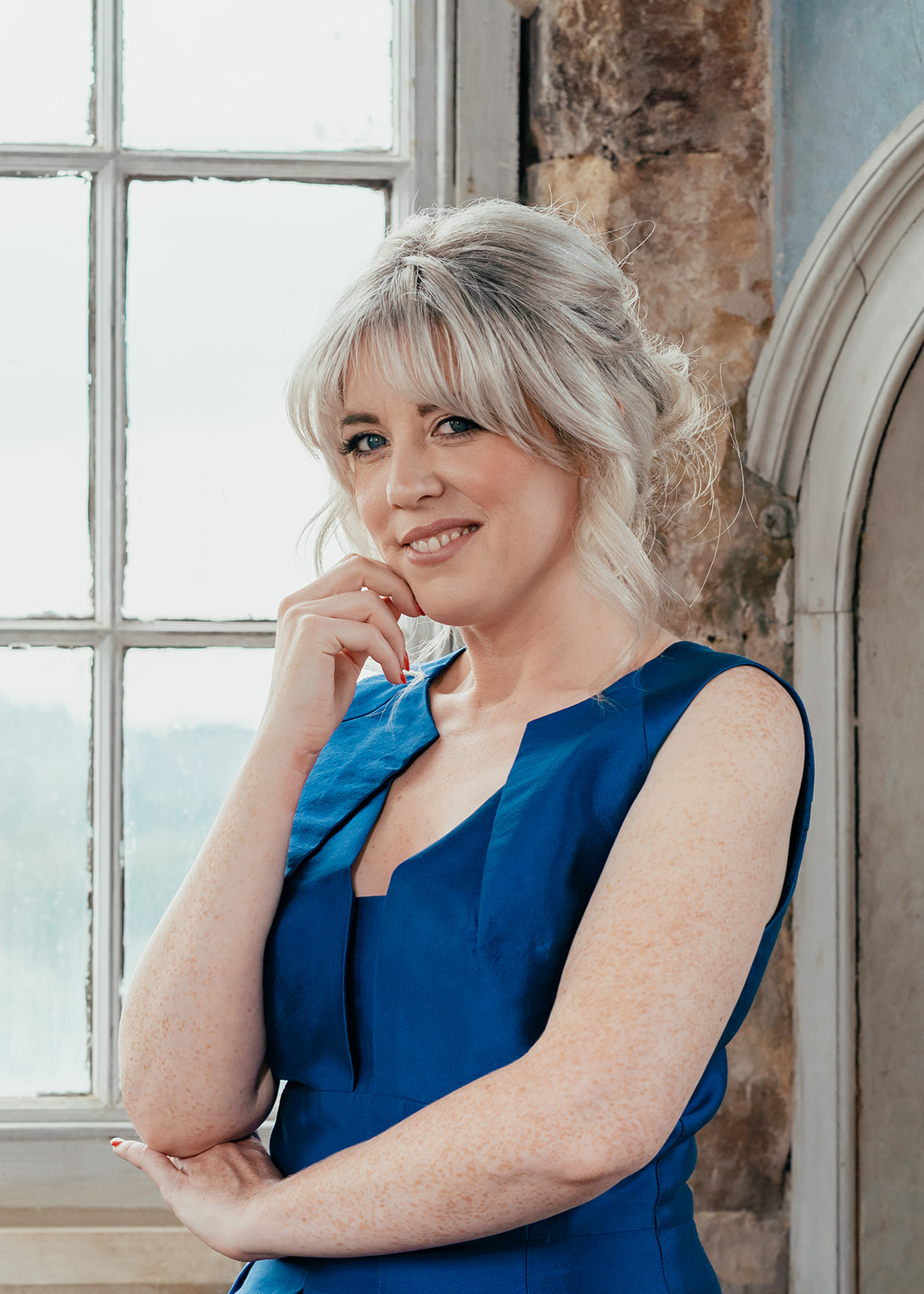
I’m Alexandra Vessey — a clinical hypnotherapist with twelve years of practice and over 2,500 clients, working from South Yorkshire with people in person and worldwide via Zoom.

What you are about to discover

You’re here because have a problem you want solving.

And what you really want to know is can I help you with your particular issue, and will it really work?

I help people who no longer want their lives limited by anxieties, fears, thoughts and beliefs which dominate almost every decision they make.

I can help you if you’re the kind of person who has started to avoid certain situations, people, experiences; or who has a particular pattern that is destructive and keeps repeating despite every wish you have to stop it.

You also know there must be more to life than struggling with anxious, life-limiting patterns running everything in your world.

This is where that changes.

First, here's a list so you can find yourself

Social anxiety

You know the name for it. You might have been told you have it, or diagnosed yourself from a list of symptoms that described you precisely. The name is useful — it tells you you’re not alone and not imagining it. What it doesn’t tell you is where it came from, why it runs so consistently, or how to end it rather than manage it. That’s what we find together.

The world getting smaller

You’ve stopped going to certain places. You know which ones without having to think about it. Restaurants where you can’t see the door. Cinemas. Concerts. Motorways. Trains you can’t get off. Anywhere you might need to leave quickly and can’t.

The monitoring

There’s a part of you that never fully switches off. It checks your heart rate. It notices when your breathing shifts. It scans every room on arrival. It has been running quietly underneath everything for so long you’ve stopped noticing it’s there.

The ovethinking and the calculations

Before you agree to anything — any invitation, any event, any journey — there’s a calculation. Can I get out if I need to? Where will I sit? What’s my excuse if I have to leave? Most people don’t do this. You do it automatically.

What other people think

You replay conversations. You analyse expressions. You prepare what you’re going to say before you say it. You know, rationally, that people aren’t scrutinising you as closely as it feels. Knowing that doesn’t help.

Speaking up

Meetings where you have something to say and don’t say it. Conversations where you agree rather than risk the discomfort of disagreeing. Rooms where your voice feels like it belongs to someone who hasn’t quite earned the right to speak.

Being the focus with all eyes on you

Eating in front of people. Signing your name while someone watches. Walking into a room after everyone else is already seated. Anything that makes you the thing other people are looking at, even briefly.

Blushing

It happens when you least want it to. A comment directed at you, a moment of attention, sometimes nothing you can identify at all — and your face tells everyone exactly what you’re feeling before you’ve decided whether to show it. The anticipation of blushing makes it worse. Avoiding situations where it might happen makes the world smaller. The shame of it is often worse than the blushing itself.

Your body doing something embarrassing

Sweating at the wrong moment. Your voice going when you need it most. Shaking hands when you need to appear calm. The fear of your body betraying you in front of people — and then it does, because the fear itself is the trigger.

Health anxiety

The symptom that won’t leave you alone. The reassurance that works for a day and then needs repeating. The googling at 2am. The doctor’s appointments that confirm everything is fine but don’t stop the next worry from arriving. Health anxiety isn’t hypochondria and it isn’t weakness — it’s a threat detection system stuck on high alert, looking for danger in the one place it’s hardest to ignore. Your own body.

Something going wrong with your body

A sensation you can’t explain. A heart rate that seems too fast. A symptom you’ve googled more than once. The conviction, arriving without warning, that something is seriously wrong — followed by relief that passes, followed by the next conviction. The cycle that never quite resolves.

The symptom that sent you to the doctor

And the doctor found nothing. Which should have been reassuring. Somehow it wasn’t.

OCD

Not just checking the locks. OCD is the mind that generates intrusive thoughts and then cannot let them go — the loop of doubt that demands certainty it can never quite get, the ritual that provides temporary relief and permanent reinforcement. It wears many faces. It is always exhausting. And it runs on the same underlying mechanism as every other pattern on this list — which means it responds to the same kind of work.

The need to know where the nearest exit is

Not just in buildings. In conversations. In relationships. In commitments. Always knowing, somewhere underneath, how you’d get out if you needed to.

Long journeys

Motorways where you can’t pull over. Bridges. Tunnels. The middle lane of a busy road. Being a passenger when you’d rather be driving. Being the driver when the responsibility feels like too much.

Fear of flying

The loss of control. The altitude. The locked door. The knowledge that if something goes wrong there is absolutely nothing you can do. The holiday you’ve declined. The promotion that involved travel you couldn’t face. The thing that has quietly cost you more than you’ve admitted.

Your stomach

The need to know where the nearest facilities are. Planning routes around it. Declining invitations because of it. The anxiety that creates the symptom that creates more anxiety. The thing you haven’t told most people about because it feels too shameful to name — but which has been quietly running your decisions for longer than almost anything else on this list.

Food and your body

Eating when you’re not hungry. Not eating when you are. The feeling after — not just physical but something heavier, something that has been running this pattern longer than the eating has. The sense that food is doing a job it was never meant to do.

How you feel about yourself

The voice that runs a commentary. The one that notices every mistake, reminds you of every failure, tells you what other people must think of you. The one that has been there so long it feels like the truth rather than a pattern.

Relationships running the same way

Different person, same dynamic. Different argument, same feeling underneath. The sense that you keep arriving at the same place regardless of where you started. The pattern that isn’t about the other person — even when it feels like it is.

Performance anxiety

Sport where your body knows what to do until it matters. Presentations that go wrong the moment they need to go right. Sex where your mind won’t let your body be present. Interviews. Auditions. Any moment where being watched changes everything.

Sleep

The mind that won’t stop when the lights go off. The 3am inventory of everything unresolved. Waking already braced for the day. The tiredness that isn’t fixed by rest.

Stress that never fully lifts

Not a response to a specific event. Just a baseline. A low hum of not-quite-okayness that you’ve learned to function around. Most people don’t seem to feel this. You’ve wondered why you do.

The identity you’ve built around all of this

The person who always sits near the door. Who has a reason ready for every invitation they decline. Who is known, by the people who love them, as someone who worries. Who has quietly stopped expecting to feel otherwise.

That one — that’s the one we change completely.

But how can you change something if you don’t know what you’re looking for?

I know where to look…


Keep reading.

You've probably already tried something

Therapy. Medication. Breathing techniques. Podcasts where you recognised yourself in every word.

And yet here you are.

Here’s why.

Everything you’ve tried has worked on your thoughts about the anxiety. None of it reached the level where the anxiety actually lives — which is beneath thought, beneath logic, beneath anything you can reason your way out of.

How can you change something if you don’t know what you’re looking for?

Your nervous system learned this pattern from a specific event. It stored it not as a memory you can access and reason with, but as a programme — a set of coordinates running silently underneath everything you do.

That programme fires in 74 milliseconds. Before a single conscious thought. Before any technique can reach it.

Nobody has shown you this before. Not because it wasn’t findable.

It was always findable.

But you need to know exactly what you’re looking for. And exactly where to look.

I do.

In twelve years and two thousand five hundred clients, I have never met a pattern I couldn’t find. I have never found a pattern that couldn’t be changed.

Not managed.

Changed.

And it starts with forty minutes.

Wouldn’t you love to finally know why this happened to you?

I can show you…


Keep reading.

This is where you find out why

The Mapping Session £97 · 40 minutes · The most important thing you will ever do for yourself.

Here’s the truth nobody in this industry tells you.

Most people spend years — and thousands of pounds — in therapy, coaching, and treatment that never quite reaches the thing. They get better at coping. Better at managing. Better at functioning around the pattern.

They never find the pattern itself.

That’s what this forty minutes does. And nothing else does it.

In forty minutes I find the exact programme your nervous system has been running — not the general shape of anxiety, not a diagnosis, not a label. Your specific pattern. The original event that started it. The precise coordinates your nervous system encoded. The logic it has been following, completely without your permission, ever since.

Nobody has ever shown you this before. Not because it wasn’t findable.

It was always findable.

But you need to know exactly what you’re looking for. And exactly where to look.

You leave with something no amount of therapy, medication, or self-help has ever given you.

Your map. The exact diagram of what’s been running your anxiety, where it came from, and the most direct route to ending it.

Not managing it.

Ending it.

You will leave that forty minutes understanding yourself at a level that will genuinely surprise you. You will leave knowing this is not a character flaw, not a life sentence, not something you simply have.

You will leave with a plan so specific and so clearly directed that the question stops being can this be changed and becomes how quickly.

Most people leave feeling two things they haven’t felt in a very long time.

Not broken.

And for the first time — genuinely, solidly, unsentimentally hopeful.

£97. For the map that changes everything. For the forty minutes that finally makes sense of years. For the moment you stop navigating in the dark.

South Yorkshire in person or Zoom worldwide.

Why it has to be this way

You might have seen other practitioners offering a free discovery call before you commit.

I want to be straight with you about what that actually is.

It’s a sales call.

The practitioner will be warm. They’ll ask questions. They’ll listen carefully and say things that make you feel understood. They may take a history. But they won’t know what to do with it. They’re not piecing together your pattern. They’re not reading your map. They’re giving you enough reassurance to feel comfortable spending money.

That’s not a criticism of their intentions. It’s a structural problem. Most practitioners don’t have a method for finding what’s actually running. So they can’t use that first session to figure you out — because they don’t know what they’re looking for.

I do.

Which is why I charge for the Mapping Session. Not because I’m withholding something you could get elsewhere for free. But because what happens in those forty minutes is the actual work. The diagnostic is the beginning of the solution. You leave knowing something real — something nobody has found before — and that knowledge is worth every penny of £97 regardless of what you decide to do next.

About that root.

Think about brambles.

They don’t announce themselves. They start quietly — one tendril at the edge of the garden, easy to miss, easy to ignore. And then another. And then another. Each one sending roots deeper while the surface spread continues, slow and deliberate and completely indifferent to everything else trying to grow.

Before long the garden is changing. Certain parts become difficult to reach. Then uncomfortable. Then impossible. The thorns are everywhere and the path through them costs something every single time — scratches, snagged clothing, the constant calculation of whether whatever is on the other side is worth the pain of getting there.

And here’s the cruellest part.

There are still berries. There are still good things in the garden — moments of joy, connection, freedom, the life you remember or imagined. But getting to them means running the gauntlet. And the berries you can reach, the ones closest to the thorns — they’re sour. Not worth it. The sweet ones, the ones that would actually nourish you, are too deep in, too well defended, too much effort for too uncertain a reward.

So most people stop going to that part of the garden.

Then they stop going to another part.

And then another.

Until one day they realise they’re standing at the door looking out at what used to be their life — and it’s just thorns. A few hard sour berries. And the memory of something that was once worth going outside for.

That’s what untreated anxiety does. Not dramatically, not all at once. Just one avoidance at a time, one tendril at a time, until the world outside the door feels more dangerous than the world within it.

Most approaches deal with the thorns. They strim them back. Reduce them. Teach you to manage the scratches. And for a while, that feels like progress.

But the root stays. And because the root stays, the bramble comes back. Different location sometimes. New tendrils in parts of the garden you thought were safe. The same root, running the same programme, reclaiming the same ground.

You can spend years strimming.

Or you can find the root.

How can you change something if you don’t know what you’re looking for?

That’s not a rhetorical question. It’s the reason most anxiety treatment fails — not because the practitioner doesn’t care, not because you didn’t try hard enough, but because nobody went deep enough to find what was actually running the whole thing.

The root of an anxiety pattern is specific. It has a starting point — a moment, an event, an experience that taught your nervous system something it has been acting on ever since. It has coordinates. A structure. A logic, however misapplied.

It is findable.

To someone who knows what they’re looking for, it can be found in forty minutes.

That’s the Mapping Session. Not a consultation. Not a sales call. Not a history-taking exercise that goes nowhere.

The beginning of finding the root.

And once we have it — once the map is in front of us and we can both see exactly what’s been running and where it started — everything that follows is precise, directed, and purposeful.

Not exploring. Not hoping. Not seeing how it goes.

Going directly to the root. And removing it completely.

→ Book Your Mapping Session — £97

South Yorkshire in person or Zoom worldwide.

Now we have the map, where can it take us?

The Mapping Session is the beginning. Not of therapy — of a journey with a known destination, a clear route, and no unnecessary stops along the way.

Once I can see your map — the original event, the coordinates, the precise pattern that’s been running underneath everything — I know exactly where we need to go. And exactly how to get there.

This is what makes the work so different from anything you’ve tried before. We’re not exploring. We’re not hoping. We’re not seeing how it goes.

We know what we’re looking for. We know where it lives. We go there directly and we change it.

You sit comfortably — in my room in South Yorkshire, or at home on Zoom in your chair, your sofa, wherever you feel at ease. I talk you through what we’re doing and why. You close your eyes.

I ask you questions about feelings in your body. Specific questions, directed at specific coordinates — the ones we mapped together. You follow a step-by-step process for working through each feeling as it surfaces.

You don’t need to relive anything. You don’t need to go over your history again. You don’t need to be hypnotised.

You just need to follow the instructions. I know the sequence. I know the running order. I know which feeling to work on first and what needs to happen next. The skill is in knowing the map well enough to navigate it efficiently — and completely.

What it feels like from the inside.

Clients describe the same things, session by session.

A weight lifting. Not as a figure of speech — physically. Something that was sitting in the body, sometimes for years, simply not being there anymore.

A quieter head. The monitoring, the commentary, the low hum of not-quite-okayness — receding. Not because they’ve learned to manage it. Because the thing generating it has been processed.

Connections they never made before. Incidents from completely different parts of their lives suddenly joining up — that they can now see were always part of the same pattern. Understanding themselves at a level no amount of therapy or self-reflection ever reached.

And the changes last. Not just in the session. From session to session, week to week. The ground that is cleared stays cleared.

Why this works when nothing else has.

We’re not working on thoughts about the anxiety. We’re not challenging beliefs, reframing narratives, or teaching coping strategies.

We’re working directly on the feeling — the precise feeling, in the precise location in your body where it lives — using a process that reaches the level where the pattern is actually stored.

The pattern was learned experientially. It can only be changed experientially.

Not understood away. Not managed into submission.

Changed. At the root. Permanently.

This is not a programme you complete and then maintain for the rest of your life. It is work you do once, properly, completely — and then it’s done.

The bramble is gone. Not strimmed. Not contained.

Gone. Root and all.

The side-effects of getting to the root

Most people arrive here looking for a solution to a symptom.

The panic attack. The blushing. The motorway. The meeting room. The thing that has been making their world smaller.

That’s the thorn. And most approaches deal with the thorn — strim it back, manage it, reduce it, learn to live alongside it. But the root stays. And because the root stays, the thorn comes back. Different shape sometimes. Different location. But the same root, running the same programme, producing the same results.

When you get to the root — when you find the pattern that’s actually been running everything and change it properly — something unexpected happens.

Everything connected to that root changes too.

You didn’t come for that. You didn’t know to ask for it. But it arrives anyway, because that’s what happens when you stop treating the symptom and deal with what was generating it.

Here’s what that actually looks like.

She came for a fear of motorways.

Driving had become impossible beyond a certain point. Motorways specifically — the inability to pull over, the speed, the loss of control. That’s what she wanted fixed.

After the work, her friends started saying something she hadn’t heard in years.

We can see the real you.

For the first time in as long as she could remember, she was expressing herself. Fully. Without the editing, the monitoring, the management. The motorway fear was the thorn. Underneath it was an identity that had been running quietly in the background — cautious, contained, smaller than she actually was. When that changed, everything changed.

The motorway was almost an afterthought.

He came for blushing.

A grown man, reduced by a physical response he couldn’t control. The redness arriving at exactly the wrong moment, in exactly the wrong situations, for as long as he could remember.

After the work — no blushing. But that wasn’t what surprised him.

What surprised him was who he turned out to be underneath it. Zero anger. Zero need to control situations or people. A man who had spent decades managing the world around him to prevent the circumstances that triggered the response — and who discovered, when that need dissolved, that he was someone he genuinely liked.

The blushing was the thorn. The root ran thirty years deep and touched everything.

He came for confidence.

A childhood diagnosis of learning difficulties had followed him into adulthood, settling into his identity like a fact about himself. He arrived at my door believing he was less than. Less capable, less intelligent, less deserving of the space he occupied.

He is one of the sharpest minds I have encountered in twelve years of this work. The diagnosis was wrong. The identity it created was the problem — not the person carrying it. When the identity changed, the real person emerged.

He is currently living a life that the man who walked into my room would not have recognised as available to him.

This is what getting to the root actually does.

It doesn’t just remove the symptom. It removes the identity that was generating the symptom — the worrier, the avoider, the person who always sits near the door — and reveals who was always there underneath it.

People come for panic attacks and find out they’re brave.

They come for social anxiety and discover they’re funny, magnetic, someone people want to be around.

They come for a fear of flying and end up booking the trip they’ve been putting off for a decade.

They come for one thing and leave as someone their friends describe as finally themselves.

That’s not a side-effect.

That’s the point.

The symptom was just the thing that finally made them come.

You know about the root.

Ready to find out who you are without it?


Keep reading.

You Don't Need Fixing. You Need Freedom.

Most approaches will help you manage it. Calm the anxiety. Reduce the trigger. Cope a bit better on a bad day.

There’s nothing wrong with that — but if the identity underneath stays intact, life quietly reorganises around it. Same patterns, different relationship. Same feelings, different year.

Freedom isn’t about trying harder. It’s about changing who you’re being at the root. That’s a different kind of work entirely — and it’s what I do.

What Identity-Level Work Actually Means

Behaviour comes from somewhere. So do thoughts. What generates both of them is identity — the quiet, largely unconscious position you’ve been operating from, often since childhood.

Most approaches work on the behaviour. Some work on the thoughts. Almost nothing reaches the identity beneath them.

That’s why insight doesn’t stick. Why you can understand a pattern completely and still repeat it. Why “knowing better” changes almost nothing.

When identity shifts, behaviour follows — and holds. Not because you’re working harder. Because you’re not the same person who created the problem.

What Changes When You Do

This isn’t about adding coping tools to a life that isn’t working. It’s about removing the internal architecture that was never really yours to begin with.

When that shifts, things move — sometimes in ways clients don’t expect.

They start earning at a level that matches what they’re actually worth. They stop undercharging, over-giving, waiting to be found out.

They choose relationships from a different place. Not from fear or habit or the hope that this time will be different — but from clarity.

They stop having the same argument with themselves every morning. Decisions get made. Things get said. Life stops feeling like wading.

I won’t tell you this is gentle work. But I will tell you it’s fast — and it lasts.

Fast. Precise. Permanent.

This is the last thing you try.


→ Book Your Mapping Session — £97

You Already Know

Twelve years. Over 2,500 clients. More than 9,000 hours of this specific kind of work.

I’m not delivering scripts or following protocols. I gave all of that up when I realised most of what passes for hypnotherapy is working on the wrong level.

What I do now is faster and deeper than traditional approaches — not because I’ve found a shortcut, but because I’ve learned to work on the thing that actually needs changing.

I work with people who are already self-aware. Already tired of the gap between understanding and actually shifting.

They’re not in crisis. They don’t need rescuing. They just need something to finally move — and they’ve usually known for a while that a while that surface-level work isn’t going to do it.

In twelve years I’ve learned the difference between someone who wants to change and someone who’s ready to. I work with the latter. I choose carefully. If that’s you, you’ll already know.

This Work Isn't For Everyone

It isn’t open-ended. There’s a clear process, a direction, and a point of completion. You won’t be coming back indefinitely.

It doesn’t manage symptoms — it works at the root. That requires real engagement, not passive attendance.

You’ll leave with the internal structure to hold your own change. The goal is your independence, not your ongoing reliance on me.

If you’re ready to participate fully in that — we should have a conversation.

Ways We Can Work Together

Some people come with one specific thing they want to change. Others are ready for something deeper — a shift across two or more areas, or the whole terrain.

And some people have one specific fear or one specific trigger, and simply want it gone.

There is a path for wherever you are.

Clear — £650 One focused piece of work. A specific pattern, a clear point of completion. Most anxiety and panic presentations live here. You come with one thing dominating. You leave with it gone and everything connected to it lighter.

Freedom — £895 More complex territory. Longer-running patterns, more than one presentation, deeper roots. More ground to clear — cleared properly, in sequence, completely.

Sovereign — £1,250 Identity-level work at the deepest level. Patterns running since childhood. Multiple interconnected presentations. The version of you that was never quite allowed to exist — found, freed, and given somewhere to go.

Every programme begins with a Mapping Session. The Mapping Session determines which is right for you. You will never be recommended a programme that doesn’t fit what we actually found.

The Real Decision

Most people think they are deciding whether to book a session.

They are not.

They are deciding whether to keep living from the same internal position — or not.

Because nothing on this page has surprised you. You already know where you shrink. You already know what you tolerate. You already know what you are done with.

The only question is whether you are ready to change the part of you that keeps recreating it.

That is the decision. Not money, not logistics. That.

You do not need to feel ready. You do not need to feel fearless. You just need to be finished with this version.

I work with a small number of people at a time — because this level of work requires focus, depth, and care.